For the complete documentation index, see llms.txt. This page is also available as Markdown.

Looking Glass Hololuminescent™ Displays

Welcome to a new way to display your brand's content and drive engagement with an incredibly thin form factor.

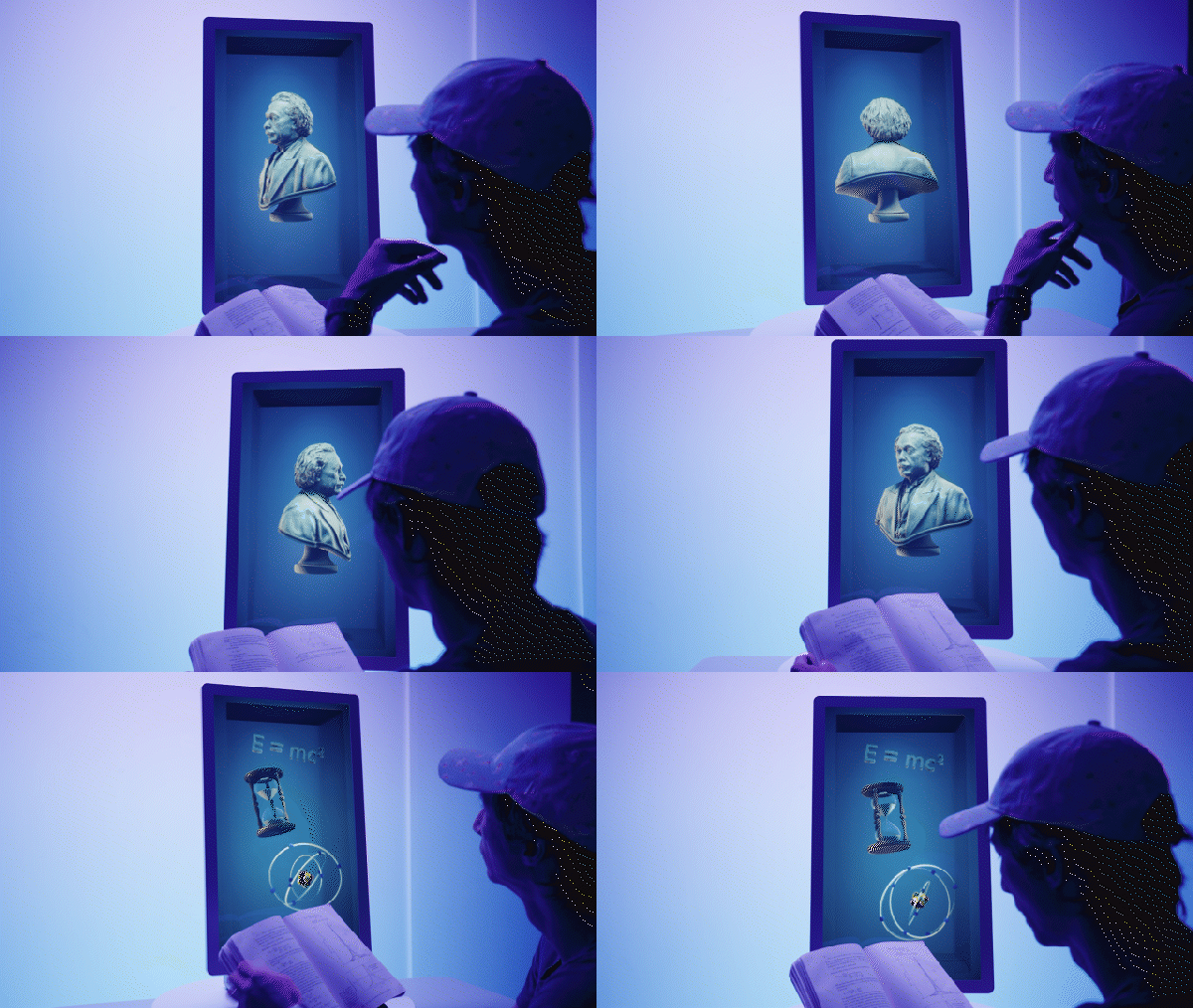
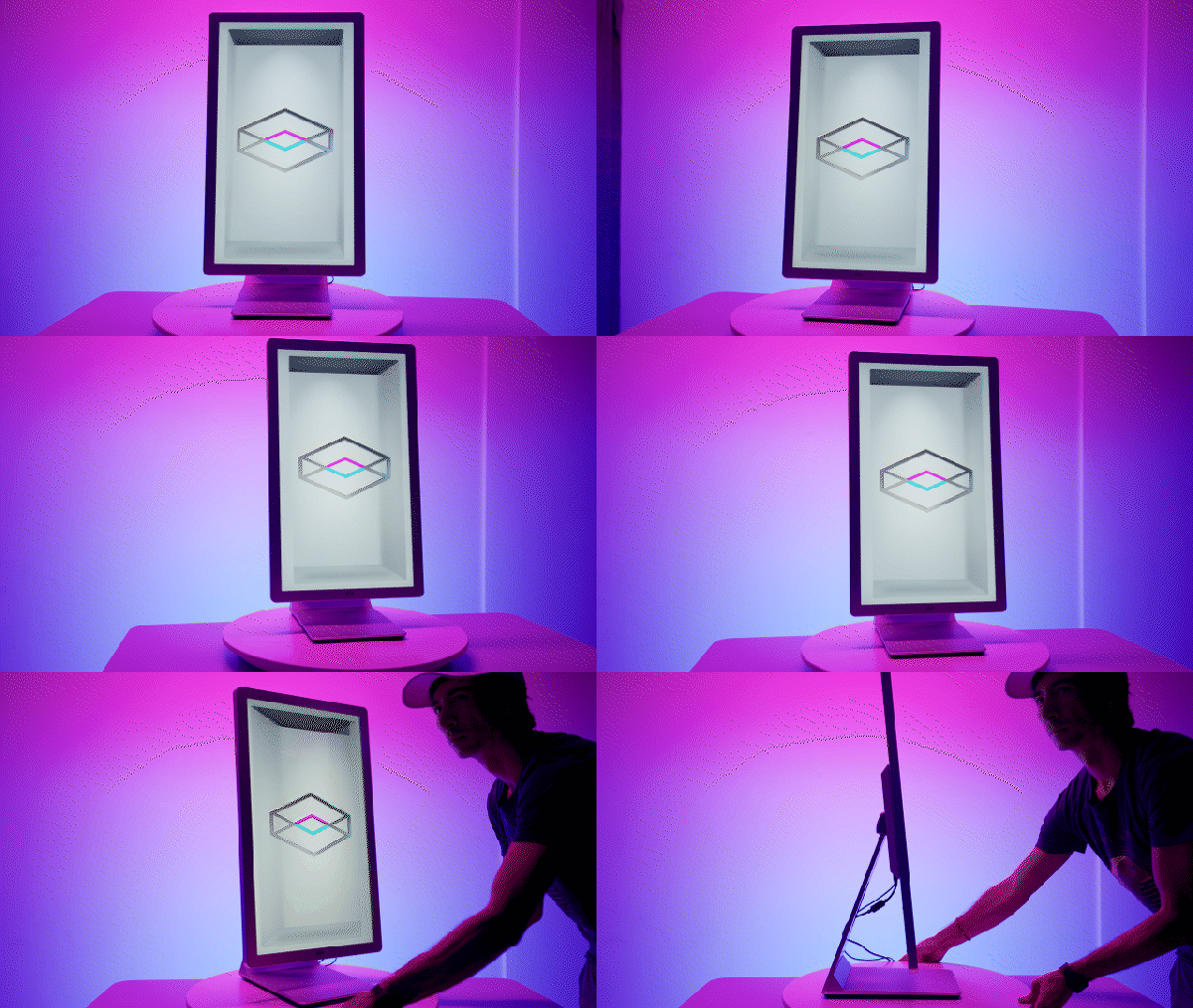
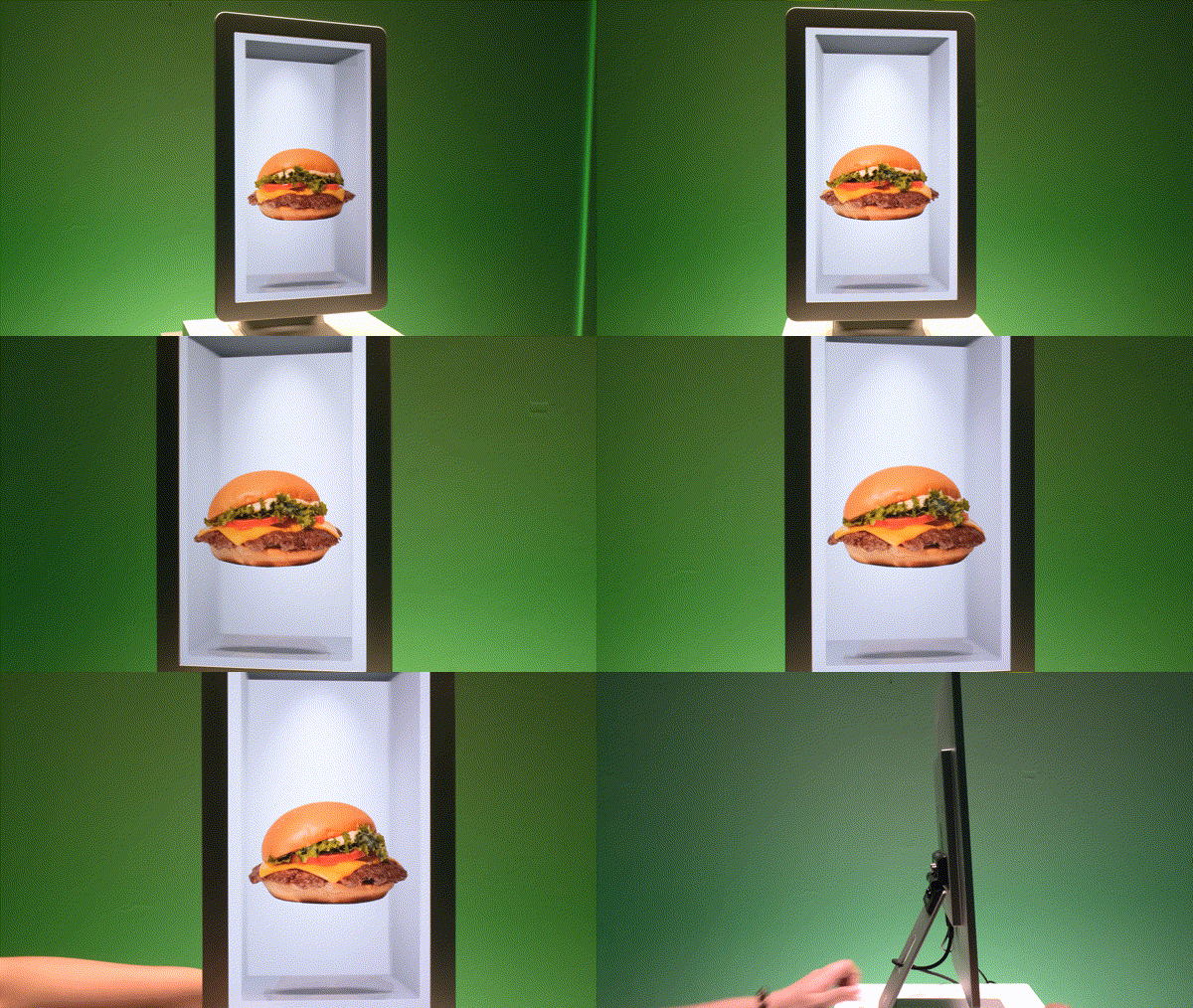
Looking Glass HLD Displays utilize a fixed holographic volume combined with high resolution display panels to create mind-blowing 3D effects. In this guide we'll walk you through how to create content for this new category of display — both video content and real-time applications.

Getting Started

Set up your HLD 86" with our step-by-step setup guide.

For other HLD models, follow our general onboarding guide.

Read more about our full display lineup on our website.

Creative guidelines

Any video tool can be used to create content — from digital content creation (DCC) apps like Blender and C4D to generative AI tools like Kling and Veo. Real-time applications are also supported. Simply run the application on a computer that can connect to the HLD via HDMI, and ensure your content is created following our guidelines.

See our creative guidelines for instructions on how to frame people/characters and products in the HLD and recreate this setup in your tool of choice.

For step-by-step tutorials for tools like Premiere Pro, After Effects, and Blender, see our Content Guides below.

Content guides

Cover

Create content in Adobe Premiere Pro and After Effects.

Cover

Render content for the HLD from tools like C4D and Blender.

Cover

Capture people and products on a backdrop.

Cover

Use modern AI tools like Nano Banana and Veo.

Cover

Create interactive applications in engines like Unity and Unreal.

Creating, reviewing, and preparing content

Once you have a video, still image, or supported 3D asset, open it in the browser-based HLD Author.

HLD Author lets you:

  • Adjust framing, rotation, chroma key, shadows, lighting, and media-specific effects

  • Create animated or depth-treated output from still images and render supported 3D media

  • Preview your content on a simulated Hololuminescent Display

  • Export the correct MP4 for the included HLD Demo Media Player, BrightSign, or standard portrait-video playback

This is the easiest way to create or refine HLD-ready content and confirm framing, depth, and orientation before deployment.

Deploying content

If your content has been generated and reviewed in HLD Author, and you now want to set up playback on hardware, see these guides:

  • Use the Demo Media Player for simple, bundled playback

  • Convert the included Demo Media Player into a full digital signage solution with Yodeck

  • Use BrightSign for long-term digital signage installations

Last updated